Anna Beever
Affiliation
University of Sheffield
Supervisors
- Rhiannon Smith-Jones (University of Sheffield)
- Vishvas Pandey (Fermi National Accelerator Laboratory)
Short bio
I am a PhD student at the University of Sheffield in the School of Mathematical and Physical Sciences, specialising in neutrino physics. Before starting my PhD in 2023, I earned a master's degree from the University of Oxford, where my fascination with particle physics began with a research project on matter-antimatter asymmetry with LHCb. My research now focuses on neutrino physics, which is unique in particle physics because we are surrounded by so many of them all the time, and yet know relatively little about them! As a member of two neutrino experiments based in the United States: the Short-Baseline Near Detector (SBND) and the future Deep Underground Neutrino Experiment (DUNE), I plan to use my time as an Enrico Fermi Fellow to analyse experimental data from SBND to advance our understanding of neutrino-nuclear theory.
Constraining Nuclear Fragmentation in the Aftermath of Neutrino Interactions
Neutrino physics could hold key information about who we are and what we're made of. Scientists have measured three types (flavours) of neutrinos, but they are unique among the fundamental particles of the Standard Model because they can change flavour as they travel through space and time, a phenomenon known as neutrino oscillations. The Deep Underground Neutrino Experiment (DUNE) is currently under construction, and in the next decade aims to probe mysteries of the universe through measurements of neutrino oscillations. These include why we live in a matter-dominated universe, and what dark matter could be made of.
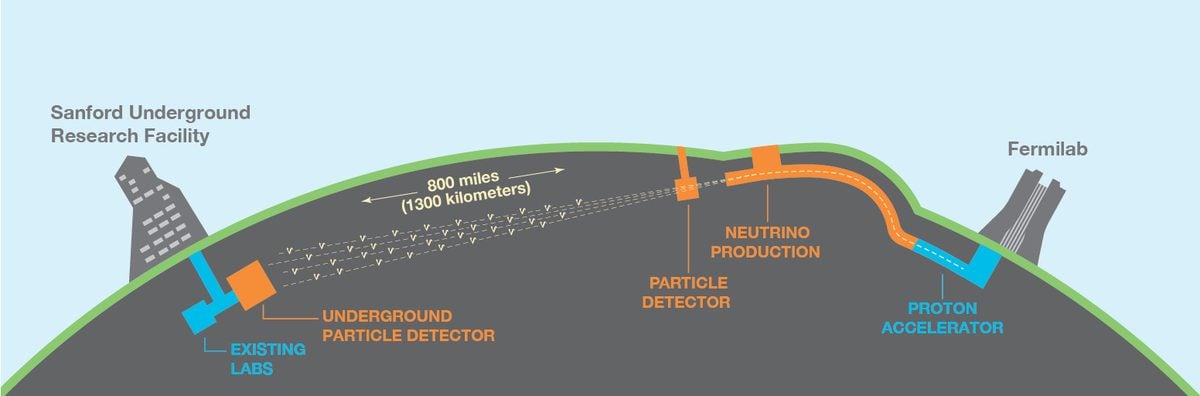
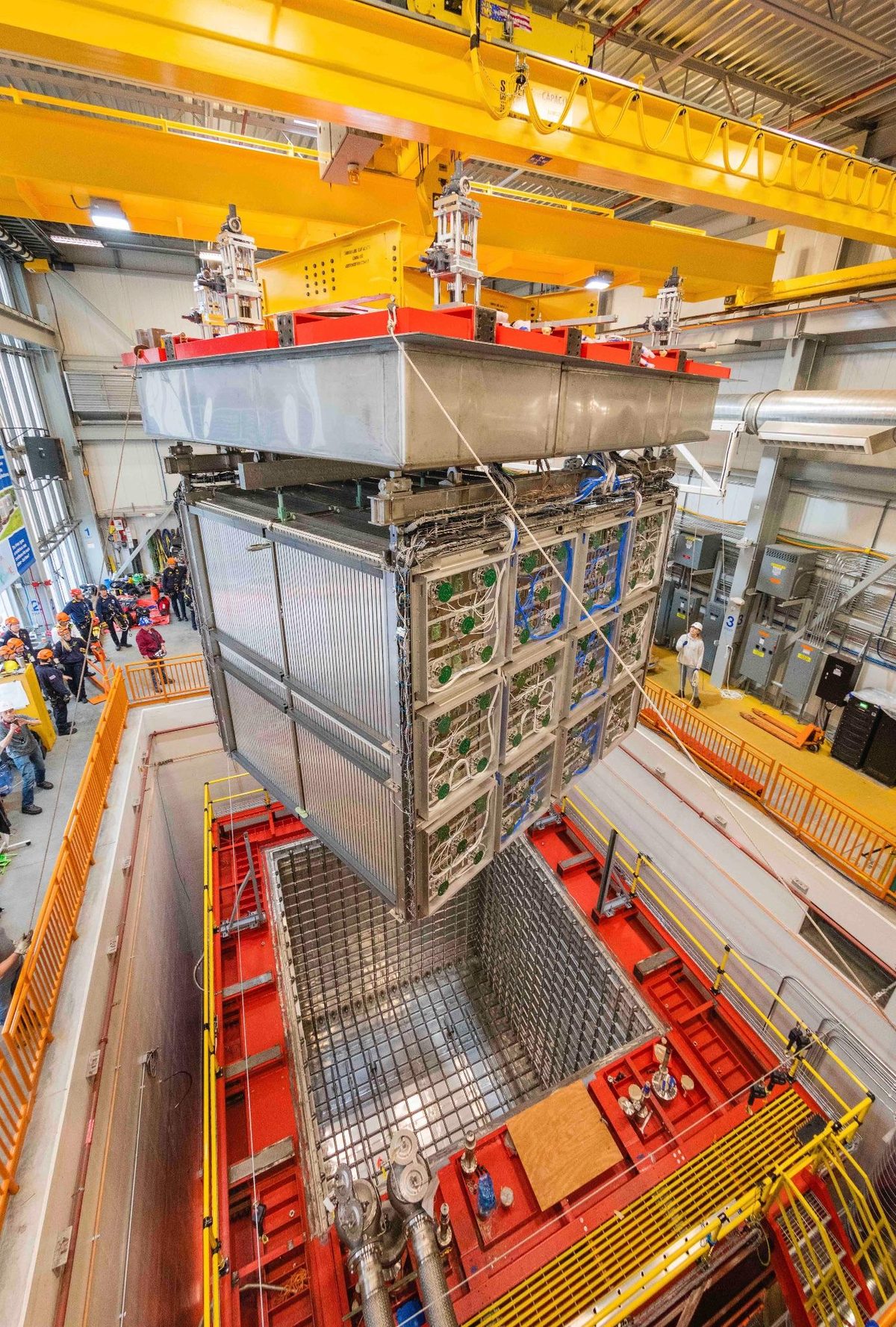
However, neutrinos are neutral and extremely light, so we can only measure them second-hand through the particles we detect after a neutrino interaction. This means our knowledge of neutrinos is only as good as our knowledge of neutrino-nucleus interactions. The Short-Baseline Near Detector (SBND) uses the same Liquid Argon Time Projection Chamber (LArTPC) technology as DUNE, and is currently recording the world's largest dataset of neutrino-argon interactions. This provides an opportunity to test our understanding of neutrino-nucleus interactions and improve our modelling, to increase the measurement capabilities of DUNE.
An area that hasn't yet been investigated is the possibility of not just nucleons, but light nuclei such as deuterons or alphas being emitted as a result of a neutrino interacting with a nucleus. This is well-motivated, as light-ion knockout has been measured in both electron-nucleus and proton-nucleus scattering experiments. Predicting when, why, and how often this may happen in neutrino experiments is the focus of my work. During the fellowship, I will develop the modelling of these processes, and use SBND's unprecedentedly large dataset to assess the contribution of nuclear clusters to the final states of neutrino interactions on argon. This information will help DUNE measurements extract the fullest information about neutrinos and their properties, contributing towards DUNE's potential to unlock the nature of the universe.