
Joseph Aziz
Affiliation
Royal Holloway University of London
Supervisors
- Lucia Hackermueller (Univeristy of Nottingham)
- Richard Howl (Royal Holloway University of London)
Short bio
Currently I am a PhD researcher working with Richard Howl at Royal Holloway University, where we focus on table top tests of quantum gravity. The ambitious goal of this field of research is to leverage quantum information techniques and quantum technology to perform an experiment in which quantum properties of the gravitational field may be witnessed. Previously I earned an MSci degree in Theoretical Physics at the University of Birmingham, winning the Moreton prize upon graduation. Being predominantly interested in quantum field theory and general relativity, I subsequently enrolled in an MSc degree from the University of Nottingham titled Gravity, Particles and Fields. During this time, I also worked as a signal processing researcher for Footfalls and Heartbeats, a company specializing in smart textile technology.
Testing Quantum Gravity with Cold Atoms and BECs
Quantum theory provides a microscopic understanding of almost everything around us with astonishing precision. Everything that is, except for gravity. There is no consensus on a full theory of quantum gravity, with some proposals that gravity is in fact not quantum at all. This situation is exacerbated by the fact that we are yet to experimentally observe any quantum properties of the gravitational field. “Is gravity quantum?” remains an unanswered question at the forefront of physics. Amazingly however, in recent years, combined developments from quantum technology and quantum information theory, have produced feasible, laboratory based protocols in which empirically answering this question will be possible.
One of the most promising avenues for this is through the interrogation of macroscopic quantum systems: where gravitational interactions are appreciable yet trademark quantum behaviour like superposition and interference can still be displayed. Ultra cold atoms and Bose-Einstein condensates (BECs) are excellent examples of such systems. BECs in particular can be comprised of millions of atoms yet are described by a single coherent wavefunction. They are highly controllable, well described by theory and allow for extremely repeatable experiments. This makes them a great test bed for quantum gravity.
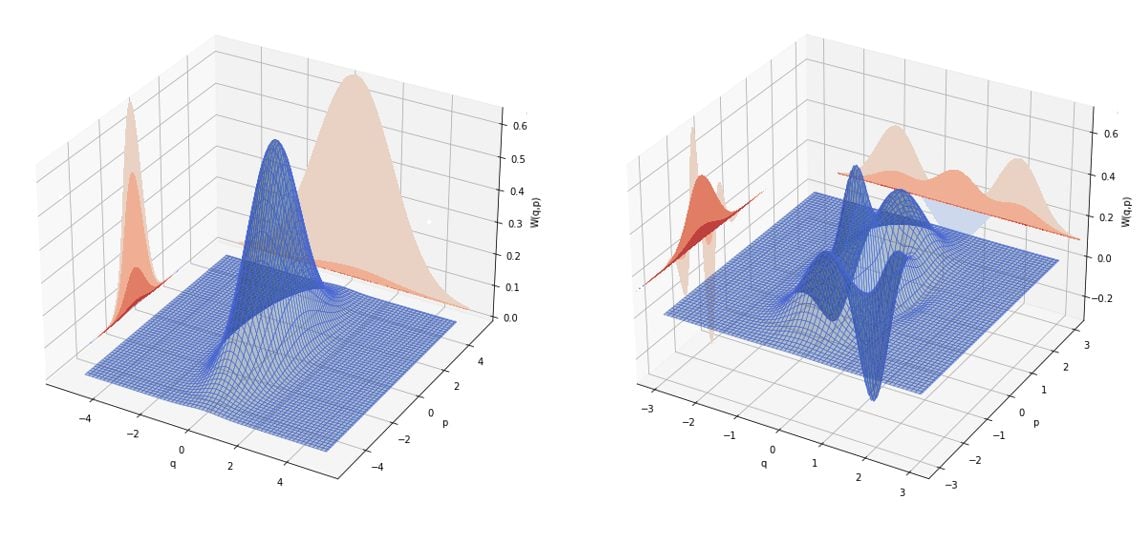
For example, it has been demonstrated that observing non-Gaussian correlations generated by the gravitational self-interaction of a BEC, would constitute evidence that gravity is quantum. In addition, ultra cold atoms are candidates for interferometry experiments aimed at observing gravitationally induced entanglement - another signal of quantum gravity. Even forgoing the observation of such entanglement, data from matter-wave interferometry experiments constrain the parameter space of classical theories of gravity (wavefunction collapse models) - a de facto test of quantum gravity in itself. Each of these approaches to testing quantum gravity are challenging and success will without question require the combined expertise of the theoretical and experimental physics communities.
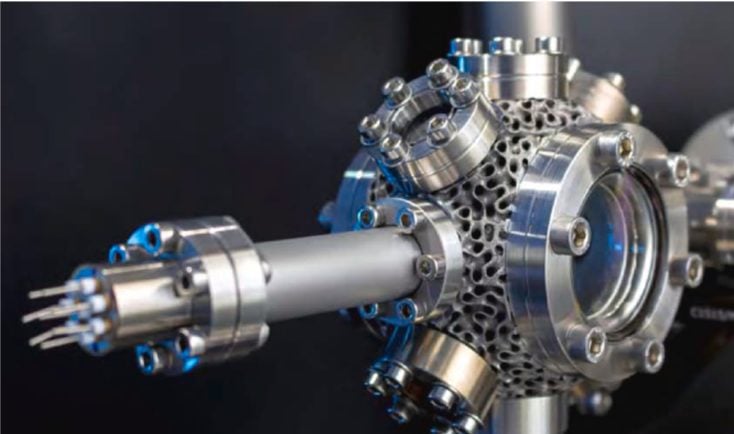
As part of this fellowship, I will join the efforts already underway at the University of Nottingham to implement novel trapping techniques for generating atom clouds with atom numbers beyond the current state of the art. Increasing the number of atoms in the experiment and therefore generating a more macroscopic quantum state, is the principal bottleneck for testing of quantum gravity with cold atoms and BECs. Further to this, I will assist in building a matter-wave interferometry experiment to use these large atom clouds to test gravitational collapse models. At Royal Holloway University I will explore signal filtering techniques for boosting the signal to noise ratio of these experiments, thus reducing the parameter strain. These theoretical efforts will benefit immensely from the knowledge and experience gained during the experimental branch of this project - another reflection on the importance of cross training for testing quantum gravity in the laboratory.